Spagnoli Joan Myers • The Jungle at the Door
Spagnoli Zig Jackson • Native Veterans
Spagnoli Jerry Spagnoli • Recent Daguerreotypes
Grabill Ansel Adams • The Sierra Club Photographs
From the David H. Arrington Collection of Ansel Adams
Santa Fe Miguel Gandert • Saints and Sinners: Rituals of Penance and Redemption
Santa Fe

Beauty and Death in the Antarctic

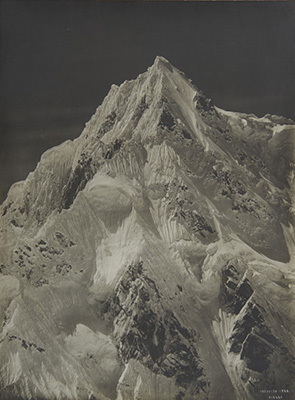
Celebrating the 100th Anniversary of Robert Falcon Scott’s successful and doomed expedition to the South Pole. Photographs by Herbert Ponting, Joan Myers and Frank Hurley.

Grabill

The Golden Age of Western Photography 1858 - 1920
Section One 1858 - 1875
Section Two 1875 - 1920
Edward S. Curtis
Adam C. Vroman
William Henry Jackson

Grabill Larry McNeil
Grabill Happy 70th Birthday Robert Allen Zimmerman • Photographs by David Micael Kennedy, Lisa Law, Baron Wolman and Guy Cross
Grabill Ansel Adams • Gems of New Mexico
From the David H. Arrington Collection of Ansel Adams
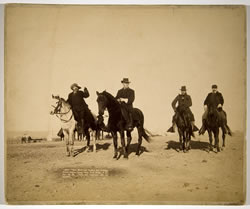
Grabill John Grabill • Photographs of Wounded Knee
and the Dakotas 1886-1892

Monczewski Carleton Watkins
Mammoth Plate Photographs of Yosemite and California
Monczewski Pat Oliphant And William Christenberry • Old Friends
June 25 - July 26, 2010
Monczewski Historic Photographs of Old Santa Fe
Monczewski Ansel Adams • Landscape and Light
Monczewski A National Treasure: The Construction of Central Pacific Railroad (CPRR) as Photographed from 1864 to 1869 by Alfred A. Hart
Monczewski Elliott McDowell • Mystical Dreamscapes
December 12, 2009 - January 15, 2010
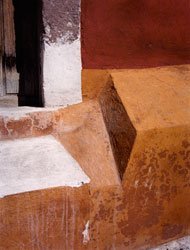
Monczewski Duane Monczewski • Calle De Luz - Street of Light
October 2, 2009 - November 14, 2009

Monczewski Ansel Adams • Trees
From the David H. Arrington Collection of Ansel Adams
Paul Caponigro • Aluminum Series and Vintage Classics
Spring and Summer 2009

Lee Friedlander • New Mexico
October 31, 2008 - January 15, 2009

Lee Friedlander ranks as possibly America's greatest photographer. For over fifty years he has prodigiously photographed what he calls the "American social landscape" with an unflinching eye for realism. Transcending mere documents, his photographs are the result of his artistic genius to structure scenes through the camera lens playing what chief photography curator at the Museum of Modern Art, Peter Galassi, calls, "a double game of light and shadow, near and far, which Friedlander wins by knitting the opposing terms together in a riotous and irregular but articulate pattern, making a whole that pulsates with life."
Joan Myers • Brimstone
June 27- September 10, 2008

Santa Fe photographer Joan Myers has been focusing on fire. The photographs in Brimstone describe an elemental world of boiling lakes, mud pots, hot springs, fumaroles, lava flows, geysers, and artifacts from geothermal sites in Yellowstone, Iceland and Pompeii. Myers began her project in Yellowstone National Park, capturing the eerie beauty of billowing steam vents and turquoise colored hot springs. Next she visited the ancient city of Pompeii, the world's premier example of the destructive power of volcanoes. Then she traveled to Iceland where the mid-ocean ridge of the Atlantic Ocean creates a "hot zone" of volcanic and seismic activity. Myers's accomplished use of subtle colors and her appreciation of the abstract quality of these scenes imbue her digitally printed photographs with visual power as well as documentary information.
Shelley Niro • Hiawatha's Belt and Other Visions
July 11- August 31, 2008

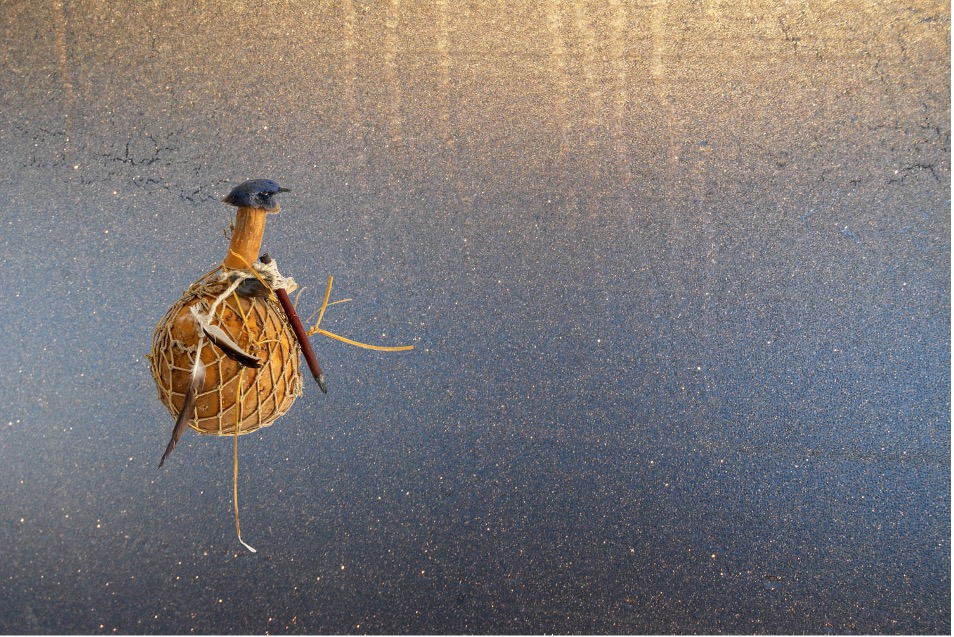
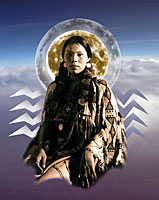
Shelley Niro is a teacher, filmmaker, painter, photographer and writer. Through her diverse work she explores the basic myths, legends and history of the Iroquois people and the diaspora of the Mohawk Nation. Her innovative, often humorous works critically re-present stereotypical images of First Nations people, and women in particular, that counter the long and misleading history of white representation of Native peoples. Niro's work underscores the fact that the consequences of colonialism are ongoing, especially in an era of globalization when the experience of the "other" is forgotten or disregarded. Her current exhibition weaves together thoughtful associations between ancestral spirits, Indian and non-Indian politics, mythic flying women, and the Iraq War.


Jack Spencer • Recent Work: This Land, Portraits, Gestures
May 30 - July 5, 2008

A prolific photographer, Jack Spencer produces over fifty new images a year. Since 2003 he has been traveling through the United States, Canada and Nova Scotia photographing on back country roads, adding to his series, This Land. Weathered houses, brush fires, cloud swathed mountains, horses and buffalo describe the spirit of place. His series Gestures and Portraits explore the unabashed beauty and mystery of the feminine. Young girls whirl like ballerinas and tantalizing women beckon in these soft focused photographs. Spencer's early years as a painter are evident in these images, along with his fondness for paintings by Degas, Vermeer, Carravagio, and other masters.


Introducing the David H. Arrington Ansel Adams Collection
May 23 - September 15, 2008

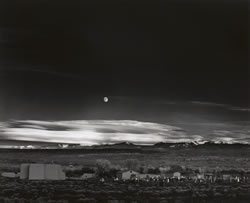
The David H. Arrington Ansel Adams Collection is the most comprehensive, stunning group of original Ansel Adams photographs ever assembled by a private collector. The contents of the collection range from Adams's first photograph made at the age of 12 of the 1914 Pan Pacific Exposition in San Francisco, to a substantial group of photographs made in Yosemite Valley, California in the 1920s and 30s, to the first examples of his most famous photograph, Moonrise, Hernandez, New Mexico, 1941 printed between 1941 and 1963. David H. Arrington is a Texas oil man who is in the process of amassing the largest collection of Adams photographs with the intention of sharing it with the public.


Baron Wolman • Rolling Stone Covers
April 25 - June 15, 2008

Baron Wolman shot 21 covers for Rolling Stone magazine during rock music's heyday in the 1960s. In an era when photographers and musicians were part of the same explosive scene Wolman had virtually unlimited access to his subjects. He made the most of it, photographing the royalty of the 60s pop and rock world. Wolman's photographs evoke memories of a wilder, more radical time when everything was up for question -- the Vietnam War, politics, spirituality, race relations, drugs, sex, and rock and roll. The Rolling Stone Covers Exhibition features all 21 of the original issues of the magazine with Wolman's photos on the cover. Each of these is paired with a silver gelatin print of that photograph.

Gilpin
Laura Gilpin • Masterworks
July 20 - September 15, 2007

Laura Gilpin (1891-1979) is among the most significant women photographers in the history of photography. Ansel Adams called her "one of the most important photographers of our time." Born and raised in Colorado Springs, she was a true westerner; independent and self-reliant throughout a life often marked by difficualties and financial insecurity. Her career mirrors the stylistic changes that occurred in American photography over three-quarters of a century. Between 1917 and the early 1930's Gilpin made soft focus, pictorial landscapes, still lifes and portraits printed on textured platinum and silver print papers, exemplary of the finest early twentieth century photo-secession art movement. Beginning in the early 1930's and for the rest of her life, she made sharper images of the Pueblo and Navaho Indians and Southwest lands. Gilpin moved to Santa Fe in 1945 and lived there until her death in 1979.
Alfred Stieglitz, Edward Steichen, Gertrude Käsebier
Summer 2007

Alfred Stiegltiz's (1864-1946) influence on photography is almost incalculable. He championed the American and European modernist movements, published the most influential photographic journals of the era, and convinced the world that photography was a valid form of artistic expression, equal to painting and sculpture. Born in Hoboken, NY, but educated in Berlin, Stieglitz studied engineering and photography before returning to the States and opening the 291 gallery in 1905. There he pioneered the art of photography and modern art, introducing America to the works of Picasso, Matisse, and Cezanne. He also published his legendary "Camera Works" magazine, which lauded photography as a creative art form. Stieglitz adapted his own photographs to reflect the dynamic energy of New York's streets, the geometry of skyscrapers, immigrant laden ferry boats, and locomotives steaming toward a purposeful future. Stieglitz met Georgia O'Keeffe in 1917 when he was 54 and she was 31. He photographed her obsessively at the beginning of their relationship, taking over 300 portraits of her between 1918 and 1937. He also became her most avid supporter, arranging shows and selling her paintings for record breaking prices.
Delilah Montoya • Women Boxers: The New Warriors
December 15 - January 15, 2007

Photographer Delilah Montoya's new book, "Women Boxers: The New Warriors," published by Arte Público Press: University of Houston, 2006, depicts the first generation of women in the Southwest on their way to becoming championship boxers. Montoya's photographs of professional boxers Holly Holm, Stephanie "Golden Girl" Jaramillo, Monica Lovato, and Jackie Chavez and others, take us deep into the rigors and rewards of women's boxing. Interest in women's boxing has not only been growing, but women boxers have actually breathed new life into a sport which will be featured for the first time in the 2012 Olympic Games. Many of the women Montoya photographed are training for that moment. Montoya's project was funded in part by the University of Houston Small Grants Program and the Cultural Arts Council of Houston and Harris County.
Elliott Erwitt • Six Decades
October 13 - November 20, 2006

Elliott Erwitt's timeless photographs of ordinary life, beach scenes, celebrities, children and dogs have delighted viewers for decades. According to Henri Cartier-Bresson, "Elliott has to my mind achieved a miracle working on a chain-gang of commercial campaigns and still offering a bouquet of stolen photos with a flavor, a smile from his deeper self.” At age 77 Erwitt has culled through sixty years of his work and chosen what he considers to be his very best photographs. These ebullient images, many of which have not been published before, reflect the vast scope of the wittiest photographer of our time. Andrew Smith Gallery will have approximately 25 of Erwitt's photographs representing many phases of his long career, including several photographs taken in New Mexico in the 1960's.
Sandra Russell Clark • Cut Adrift
September 16 - October 2, 2006

The American South has been an ongoing source of inspiration for Clark. Her numerous photographic series including Gardens of Reflection, Elysium, and In Search of Eden have documented the Gulf Coast's verdant landscapes, formal gardens, and aboveground cemeteries. Her images, according to one writer, "seduce the viewer with their unabashed beauty and ignite feelings of melancholy, loss, and optimism." Clark's series on New Orleans cemeteries capture through infrared film their opulent, or downtrodden or otherworldly beauty. They appear in Clark's book, "Elysium, A Gathering of Souls, New Orleans Cemeteries (Louisiana State University Press, 1997)." A native of New Orleans, Sandra Russell Clark lost her home and studio in Hurricane Katrina.
Victor Masayesva • Drought
August 18 - September 25, 2006

Victor Masayesva, Jr., who lives in Hopi, Arizona, is a distinguished filmmaker and photographer whose exhibit titled, Drought, marks his fifth show at Andrew Smith Gallery. Masayesva is an acute observer of the struggles of Native People to retain their identity, culture and spirituality against enormous obstacles. His manipulated photographs have explored such issues as reappropriation, government encroachment on sacred sites, historical biases, environmental destruction, and limitations of human perception and sensitivity. His current body of work focuses on the crippling drought of 2006, and explores how global warming is impacting the Hopis and the world as a whole. Masayesva will be signing copies of his new book Husk of Time: The Photographs of Victor Masayesva, published by the University of Arizona Press.
Bill Wittliff • A Selection: Lonesome Dove and La Vida Brinca
July 14 - August 14, 2006

Based in Austin, Texas, Bill Wittliff has had a distinguished career as photographer, film producer, director, publisher and screenwriter of the Emmy award-winning television series Lonesome Dove. As a photographer Wittliff has long been known for his photographs made on the set of the 1989 TV mini-series, Lonesome Dove. Wittliff's photograph from the series titled, Gus on the Porch, remains the best selling single original photograph of the last decade. These days Wittliff shoots with pinhole cameras, photographing Hispanic fiestas, religious observances, people, architecture, and rural scenes in Mexico, Texas, and New Mexico. Probing beneath the literal look of things, Wittliff exposes an uncanny realm where half ordinary, half specter-like forms inhabit another reality.
Fredric Roberts • Humanitas

After working for thirty years as an international investment banker Fredric Roberts turned his back on the world of high finance and picked up a camera. Since 2000 he has worked in the tradition of such great travel photographers as Henri Cartier-Bresson, Robert Capa and Steve McCurry. His stunning color photographs of people and scenery from India, China, Thailand, Cambodia, Bhutan and Myanmar are the subject of the book Humanitas:Volume One, (2004). His photographs describe a glittering, exotic world of golden Buddhas, silver flecked saris, elaborate turbans, jewelry, embroidered scarves, prayer beads, begging bowls, holy books, and reed sandles. Roberts' work is in the collections of Stanford University and the Museum of Photographic Arts in San Diego. Recently he won multiple awards in the 2003 and 2004 International Photography Awards.
Patrick Nagatani • Chromatherapy
March 10 - April 30, 2006

Tableaux artist Patrick Nagatani pioneered the Contemporary Constructive Movement in the late 1970s, developing a vocabulary of ideas and presentation based on constructing large scale sculptures, small models and paintings in front of the camera. His recent "Chromatherapy" project consists of 60 color photographs that relate to the belief that colored light rays can cure diseased organs of the body. Reminding viewers that light is the basic tool of photography, Nagatani creates real and imaginary relationships between photography, light and healing, inviting viewers to suspend disbelief and entertain the idea that there actually exists a wonderful, non-invasive alternative to surgery and drugs.
Jack Spencer • This Land
November 25, 2005 - January 15, 2006

Jack Spencer, based in Nashville, Tennessee, achieved notoriety for his photographs of people and landscapes of the Mississippi River Delta that appeared in his first book, Native Soil (1999). Spencer's umber hued and selectively colored prints glisten with a soft tactility seldom seen in photography, achieved through unique technical processes devised by the artist. For the last three years Spencer has been taking landscape photographs for his series, "This Land." He has traveled through various parts of the United States, Canada and Nova Scotia, avoiding interstate highways and doing his best to get lost on back country roads. From the cloud swathed Grand Tetons, to a grass fire in Idaho, to the palmetto forests of Florida, the artistic process for Spencer is both a journey to actual places, and a journey through realms of imagination and uncanny beauty.
Jerry Uelsmann • Other Realities
November 11, 2005 - January 15, 2006

Jerry Uelsmann is one of America's most important contemporary photographers, known throughout the world for his dreamlike images that evoke myth, magic, humor, and melancholy. Since the late1950s Uelsmann’s surreal, composite photographs have challenged conventional notions of reality, and changed the language and direction of photography. Uelsmann uses up to seven enlargers in the darkroom to create his enigmatic images of nature, the human figure, exterior and interior environments, and improbable relationships. Each photograph is hand printed using multiple negatives on single sheets of paper. The photographs in the exhibit at Andrew Smith Gallery were made between 1998 and 2005. Many appear in the new book,  Jerry Uelsmann: Other Realities (Bulfinch Press, New York, 2005). 
Lee Friedlander • Sticks and Stones
July 8 - September 12, 2005

Lee Friedlander is internationally regarded as one of America's most important contemporary photographers. For over fifty years he has photographed the American social landscape, working within the tradition of Eugene Atget, Walker Evans, Charles Sheeler, Garry Winogrand, and Robert Frank. Friedlander photographs places characterized by the eccentricities and imperfections, by the telephone booths, chain link fences, advertising, phone poles and street signs that describe who we are as a culture. Transcending mere documents, his photographs are the result of the artist's masterful ability to structure scenes through the camera lens.
Paul Caponigro • Still Lifes 2004
March 18 - May 16, 2005

With a distinguished career spanning over fifty years, Paul Caponigro is regarded as one of the greatest photographers of our time. His newest body of work, Still Lifes 2004, includes over twenty-five superbly printed arrangements of weathered rocks, polished shells, rain spattered leaves, brittle corn husks, and gnarled wood. The images explore how light interacts with opaque, translucent and transparent surfaces. Underlying these surface concerns is a meditation on the transmutation of matter over time, and the unexpected beauty that appears as things weather and decompose. Paul Caponigro continues to reveal the wondrous in the ordinary, and to explore symmetries and conjunctions that abound in nature.
Annie Leibovitz • American Music
October 22, 2004 - January 15, 2005

Annie Leibovitz's career began in the early 1970s when at age 24 she became chief photographer for Rolling Stone Magazine. For her recent series, "American Music," Leibovitz made an ambitious photographic journey in order to describe how popular music is made and how musicians live. "American Music" covers nearly a century of musical creativity. Most of the photographs were taken between 1999 and 2001, but the exhibit includes some images from the early 1970s. Portraits include Pete Seeger, Norah Jones, B.B. King, Brian Wilson, Dan Zanes, Emmylou Harris, Hank Williams, Iggy Pop, Johnny Cash, June Carter Cash, Lucinda Williams, Mary J. Blige, Patti Smith, The Roots, The White Stripes, Willie Nelson, and many others.

Jack Spencer • Aparicioñes
March 12 - April 12, 2004

Jack Spencer's umber-colored images of rural life in the American south and Mexico have been compared to the writings of William Faulkner, Cormac McCarthy, and Flannery O'Connor. His exquisitely crafted prints are the result of an exceptional vision, original darkroom technique, and a marvelous sense of story. Spencer is known for his photographs of humid bayou country, hard living black musicians, dogs cavorting, and folks going about their business in the backwaters of the Mississippi River Delta. He also worked in Mexico for three years on "Apariciones," a series of over seventy-five images of people and landscapes filled with magical realism. Spencer's newest project is a series of landscapes taken in various parts of the United States simply called, "This Land."

Joan Myers • Wondrous Cold: An Antarctic Journey
November 28, 2003 - January 15, 2004

Over the last twenty five years Joan Myers has undertaken one ambitious project after another. Long fascinated with the South Pole, Myers was chosen by the National Science Foundation to participate in their 2002-2003 Antarctic Artists and Writers Program. She spent four months photographing virtually every aspect at McMurdo Station and elsewhere in the Antarctic. Inside the station she documented scientific activities, personnel, and infrastructures. Outside the base she photographed historic huts, geologic wonders and wildlife. Myers will be collaborating with New York Times science writer Sandra Blakeslee on a book of her photographs and experiences. For her work on Antarctica Myers was awarded the 2003 Eliot Porter Prize by the New Mexico Council on Photography.

Herman Leonard • Jazz Classics
October 3 - November 15, 2003

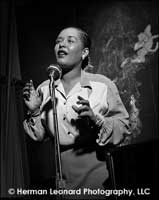
Photography and jazz music have been Herman Leonard's two great passions for over fifty years. During the 1940s and 50s he roamed the nightclubs of New York and Paris, photographing the greatest jazz musicians of that era: Duke Ellington, Charlie Parker, Dizzy Gillespie, Thelonious Monk, Count Basie, Billie Holiday, Louis Armstrong, Sarah Vaughn, and many others. Leonard's photographs depict magical moments when the great jazz musicians are utterly transported by their music, relaxing backstage, and joking among friends.

Hulleah J. Tsinhnahjinnie • Portraits Against Amnesia
August 22 - September 20, 2003

Hulleah Tsinhnahjinnie is a seminal figure of the first generation of Contemporary Native photographers. For over thirty years her art has imbued the complex issues of identity with intelligence, wit and grace. Tsinhnahjinnie&Mac246;s speaks to a Native audience, without apology to the "mainstream". Her graphically powerful works involve a layering of abstract imagery, symbols, and personal references from her own life. She is a 2003 Eiteljorg fellow with the prestigious Eiteljorg Museum of American Indian and Western Art in Indianapolis.

Flor Garduno • Inner Light
July 11 - August 10, 2003

Flor Garduño is Mexico's acclaimed "poet-photographer." Her powerful images of native peoples throughout the Americas bridge the threshold between the sacred/temporal worlds, and allow viewers to glimpse what Carlos Fuentes called "the moving portrait of eternity." Recently Garduño has photographed still lifes and female nudes, describing a deeply personal realm in which the artist wanders through the multi-faceted territory of the mythic feminine.

Paul Caponigro • Fifty Years of Photography
March 14 - May 5, 2003

Paul Caponigro has spent fifty years exploring the natural world and architectural forms from antiquity. His printing reflects a heightened sensitivity toward gray tonalities rather than the impact of strong blacks and whites. He invites us to pause for a moment and reflect with fresh eyes on subtle movements in nature like the ebb and flow of tides, surfaces polished by wind and water, or twisted by the elements into goblin-shaped knots and whorls encrusted with lichens.

Ansel Adams • Monumental Classical Photographs
March 14 – April 20, 2003

Ansel Adams is regarded as the greatest landscape photographer of all time. We owe much of our understanding of Western wilderness areas and their preservation to his breathtaking images. Not only was Adams' artistic influence gigantic, so were his mural photographs which he printed in sizes up to 6.5 x 9.5 feet. Adams understood the visual force of monumental photographs. He mastered the process and was regarded as the technical and artistic expert in the field, becoming the virtual authority on what he called, "enlargements with a vengeance."

August Sander • Portraits from the Twentieth Century

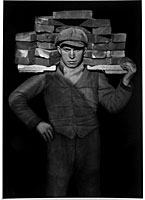
August Sander (1876-1964) was the great German photographer from the first half of the twentieth century who brought a new, objective realism to photography and redefined ideas about portraiture. Having become convinced that photography and painting were completely separate media and should follow independent courses, Sander strove for photographic portraits that were sharp and clear, free from retouching or manipulation. His most significant body of work was titled, "Citizens of the Twentieth Century," an ambitious, rank-ordered portrait collection of German society.

Baron Wolman • Forever Young
November 29, 2002 - January 15, 2003

In 1967, during rock music's heyday, Baron Wolman met Jann Wenner, the founder of Rolling Stone magazine, who hired him as the magazine's first chief photographer. For the next three years Wolman photographed the royalty of the 60s pop and rock world. His images of Janis Joplin, Jim Morrison, the Grateful Dead, Jimi Hendrix, the Who, the Rolling Stones, and other celebrated musicians were the graphic centerpieces of Rolling Stone's layout. Wolman's timeless silver and platinum print images reflect an era when photographers and musicians were part of the same explosive scene.

Danny Lyon • Indian Nations
October 18 - November 18, 2002

Danny Lyon has spent his career photographing marginalized groups in the U.S. and abroad, drawing attention to the human spirit's struggle for economic survival, and providing an inside look at radical, counter-culture lifestyles. The power of his photographs lies in Lyon's ability to create a simple tableau that reveals cultural intensity at its fullest, making it impossible for viewers to side-step challenging issues. Lyon has had major exhibitions at the Museum of Modern Art in New York, the Art Institute in Chicago, and the Center for Creative Photography in Arizona.

Josef Sudek • Still Lifes
Summer/Fall 2002

During his lifetime, Josef Sudek (1896-1976) was Czechoslovakia's most famous photographer -- the národní umèlec (national artist) of his country. Internationally he is regarded as one of the great masters of the 20th century who introduced aspects of modern art to the medium of photography. In the vast scope of his work one finds Pictorial, Abstract, Surreal and Dada elements. At the same time, Sudek maintained a diverse and unique photographic vision that evades categorization. Like Edward Weston, Sudek made magnificient photographs of every subject he chose to work with.

Magnum Photographers
The Classic Years • 1941-1985
July 5 - August 7, 2002

Magnum Photos, Inc. was founded in 1947 by Robert Capa, Henri Cartier-Bresson, David Seymour (Chim), George Rodger, among others. They set about to form a consortium that would protect photographer's ownership of photographic negatives, give them editorial control over the use of their photographs, and free them from the tyranny of big magazine or agency editors who took advantage of reporters' time as well as their negatives. For the first time in the history of photography the Magnum agency provided its members with their own copyright. Many Magnum photographs are regarded as classic masterpieces that encapsulate in a single image the sweeping global changes and looming personalities of the twentieth century.

Alan Ross

Alan Ross' photographs describe the beauty of the western United States in images of dramatic deserts and mountains, cloud-swept skies, and radiant light. A master printer and educator, he has led workshops in locations ranging from Yosemite to China, and was Ansel Adams' Photographic Assistant in Carmel for five years.
Ansel Adams

Ansel Adams (1902-1984) is considered the greatest landscape photographer of all time. His breathtaking images of the Sierra Nevadas, the Pacific coastal region, the Southwest, and other locations throughout the United States elevated the art of photography to new heights. As a teacher, Adams' influence on students of photography was incalculable. His development of the Zone System, his books, lectures and original prints continue to profoundly influence both photographers and collectors of photography.
Barbara Van Cleve

Descended from Montana pioneers, Barbara Van Cleve is renown for her photographs of ranchers, rodeos, cowboys and cattlewomen. Her photographs range from straight-forward documents, to images of movement, myth and imagination.
Jody Forster

Jody Forster's landscape photographs of the Southwest U.S., northern Mexico, the Himalayas, Thailand, and Antarctica reveal moments when powerful forces of nature interact. Forster uses an 8 x 10" view camera and prints his own silver print photographs. His color prints evoke a heightened sense of atmosphere, perspective and space.
Jerry Uelsmann • Masterwork
November 23, 2001 - January 10, 2002

Jerry Uelsmann is known throughout the world for his dream-like scenes created by hand printing multiple negatives on single sheets of paper. In the 1960s his hybridized style of image-making challenged conventional notions of reality, and changed the language and directions of photography.
William Henry Jackson

Born only four years after the invention of photography, William Henry Jackson (1843-1942) was the first person to photograph many western scenic wonders such as Mesa Verde and Yellowstone. Using huge wet-plate cameras he worked on the Geologic Surveys, documented archaeological ruins, artifacts, native Americans, and the expansion of the railroad. His most prolific legacy was with the Detroit Publishing Company.
Lee Friedlander • Face to Face
 
October 19 - November 19, 2001

Lee Friedlander is internationally recognized as one of America's most important contemporary photographers. In the 1960s his silver print photographs created a shockingly new aesthetic of asymmetrical and fragmented images of the United States. In recent years he as been photographing himself, his wife, and family members, bringing visual power, dry wit, and psychological complexity to ordinary themes.

Phil Borges • Indigenous People - Landscapes of the Soul
May 18 - June 20, 2001

Phil Borges travels to remote parts of the world photographing people of vastly different backgrounds and cultures. His intimate, split-toned portraits reveal the daily lives and struggles of native peoples around the planet. Borges's portraits were taken in Tibet, Peru, the Amazon Basin, Kenya, Siberia, Mongolia, the Philippines, and elsewhere.

Frederick H. Evans
Highlights of Gloucester Cathedral, 1890
A Rare Collection Of Platinum Print Photographs

Frederick H. Evans (1853-1943) advocated "untouched realism" in an era when it was believed that only by elaborate manipulation could photography approximate fine art. Evans developed his negatives mechanically and printed them without retouching. The 40 platinum print photographs from Evans' masterwork, the Albert Harrison album of Gloucester Cathedral were printed between 1890 and 1891.
Patrick Nagatani • Excavations
March 30 - May 14 , 2001

Patrick Nagatani creates tableaus made up of two and three-dimensional imagrey which he then photographs. In the series, EXCAVATIONS, Nagatani delved into the field of archaeology and the "malleable picture space" of the photograph. The thirty Ilfochrome and silver print photographs explores the thin line between reality and illusion, and the ways in which photography creates, recreates, or supports a particular history.
Christopher Burkett

Christopher Burkett is one of the great contemporary of photographers of the pristine American wilderness. Each Cibachrome photograph reflects the artist's impeccable printing skills, and his desire to share with viewers a conviction that the eternal is present in ephemeral nature. Burkett prints all his own work, striving for maximum image clarity without distortion or exaggeration of color.
Zig Jackson • Road Signs, Tribal Lands and Hot Dogs
August 17 - September 17, 2001

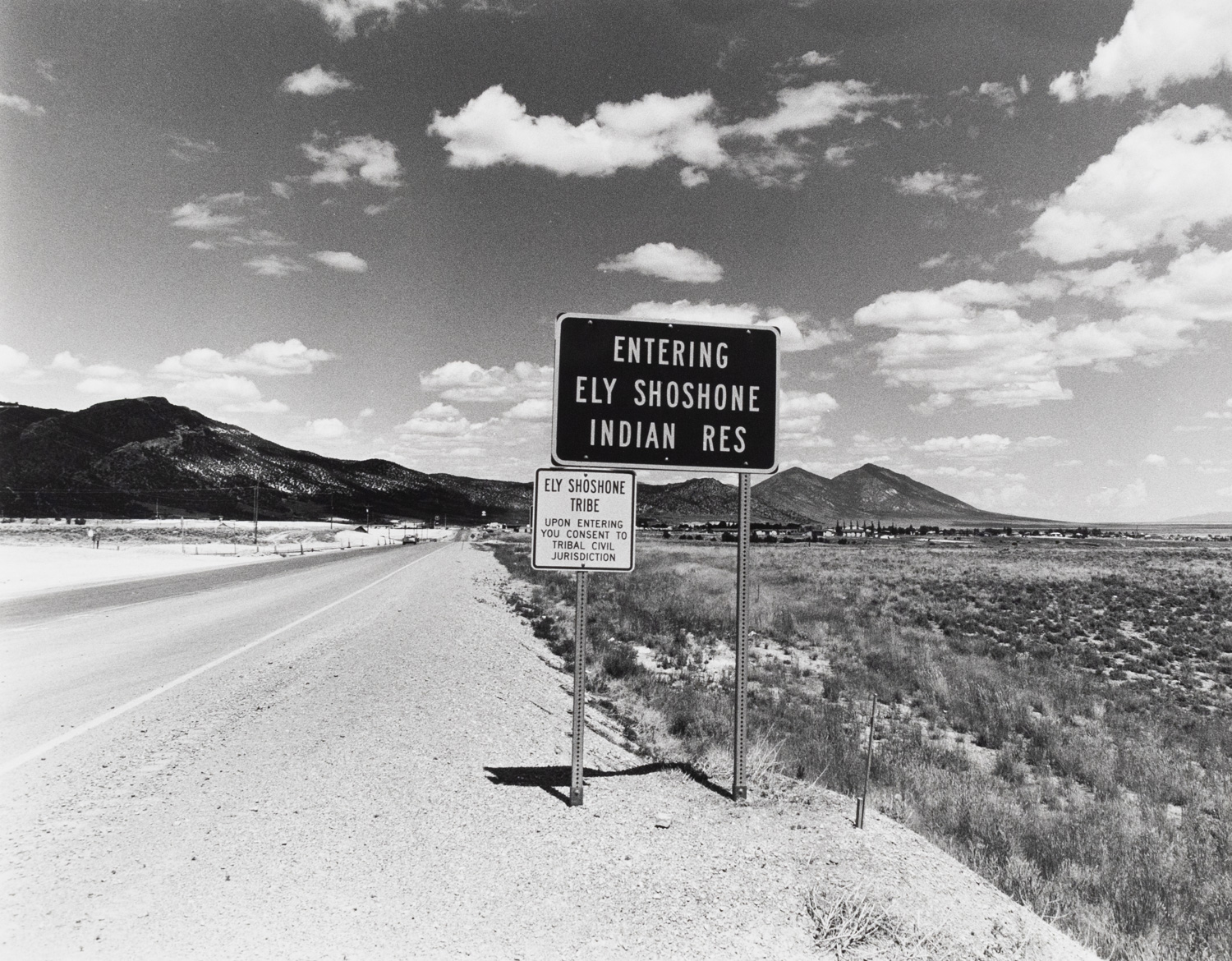
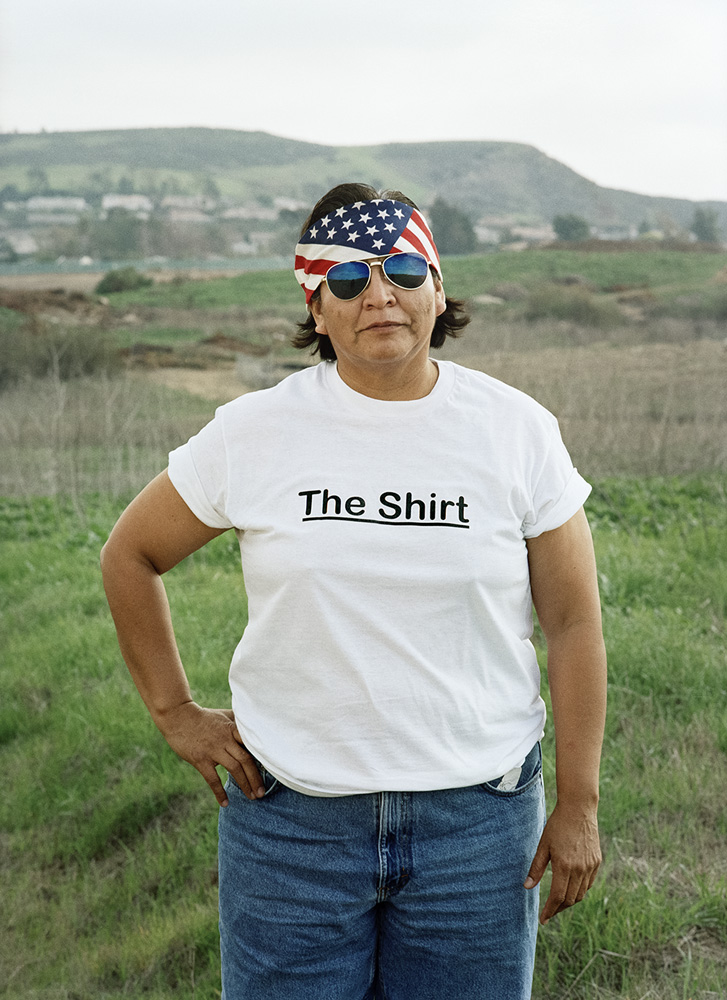
Zig Jackson is an American Indian artist who uses photography to de-mythologize his own history and to break down the romanticized stereotypes of Indians perpetuated by popular media and folklore. In the straightforward photographic style of Robert Frank, Jackson captures the world of contemporary Indians, touching upon complex issues of tourism, marketing, myth, power sites, traditions, and stereotyping.
Annie Leibovitz • Nudes
January 12 - March 15, 2001

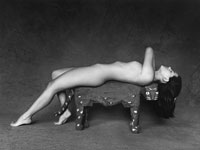
Celebrity photographer Annie Leibovitz is one of the most exciting, entertaining, and original photographers of our time. Her recent series entitled, NUDES, consists of ten monumental, classical studies of the female form. Measuring 42” x 35,” each Iris print is printed in a limited edition of 25 on handmade, archival watercolor papers. The timeless elegance and grand scale of these photographs make them Leibovitz’s most beautiful work to date.
Miguel Gandert • Indo-Hispano Rituals
November 24 - December 20, 2000

Over the last twenty years Miguel Gandert has photographed innumerable social rituals, people, and landscapes of his native New Mexico, concentrating on the lifestyles and traditions of rural and urban Hispanics living along the Rio Grande valley from Mexico to southern Colorado. Gandert's many national and international exhibitions include shows at the Whitney Museum of American Art and the National Museum of American History at the Smithsonian.
James Balog • Animals on the Border
October 6 - November 17, 2000

James Balog is renowned for his photographs of endangered animals around the world. He has devoted himself to photographically documenting the effects of human exploitation of nature, drawing attention to the fact that some 900 animal species are currently endangered. Recently he has been making lively, candid photographs of wild animals taken at close range with a hand-held camera called the Holga.
Historic Indian Portraiture From the Collection Of Kurt Koegler Part II
August 4 - September 15, 2000

19th and 20th century Indian portraiture from the Kurt Koegler Collection. Kurt Koegler was a New York attorney who began collecting photographs of American Indians in 1979. The photographs from the collection date from the Civil War to 1930. Part II of the Koegler Exhibit includes work by pioneers of photography like John K. Hillers, Alexander Gardner, Timothy O'Sullivan, George Trager, Zeno Schindler, Will Soule, Charles Lummis, Gertrude S. Käsebier, Ben Wittick, and others. Subject matter includes portraits of powerful Indian chiefs who came to Washington, D.C. to negotiate treaties, Indians who were executed after massacres, and Indians who died in battle.
Historic Indian Portraiture From the Collection Of Kurt Koegler Part I
May 26 - July 5 , 2000

19th and 20th century Indian portraiture from the Kurt Koegler Collection. Kurt Koegler was a New York attorney who began collecting photographs of American Indians in 1979. The photographs from the collection date from the Civil War to 1930. Part I features photographs made between 1905 and 1930, by Karl Moon, Frederick Monsen, Ansel Adams, Beverly Dobbs, Arnold Genthe, J.A. Johnson, Harriet Smith Pullen, and Roland Reed. These photographers endeavored to ennoble their subjects by envisioning them in an idealized past, as if the disruption of the nineteenth century had never occurred.
Paul Caponigro • Cornucopia
March 17 - May 1, 2000

Paul Caponigro is one of the legendary photographers working today. With an artistic career spanning half a century, his photographic eye, powers of inspiration, and technique are unmatched in the world of photography. In 1999, after a six year hiatus, Mr. Caponigro created twenty-four exquisite new still lifes that celebrate the cycles of nature, and hint at an underlying order and intelligence to the universe.
The End of the Trail
Photographic Fin-de-Siecle Self Portrait Show
December 24, 1999- January 15, 2000

For the past twenty-five years Andrew Smith Gallery has worked with some of the most distinguished artists in the world. In late 1999 and in late 2000 the gallery invited many of its artists to create two self-portraits that related to the millennium past and the millennium future. The description "self-portrait" was meant to be used imaginatively be any subject in any medium.


ANDREW SMITH GALLERY, INC.
Masterpieces of Photography

All photographs are copyrighted by artist unless otherwise noted. All Rights Reserved.
© Andrew Smith Gallery, Inc. Artists survive from their copyright which represents
their creativity. Please respect their rights by not copying or otherwise using their work
without their permission. No part of this site may be reproduced or transmitted in any
form or by any means without the written permission of the copyright owner.
Licensing agreements for commercial use are available. Contact us for information.